ROS 2 · Jetson Nano · RPLiDAR
Perception inputs, tested in context.
Academic subsystem studies on a ROS 2 mobile platform, covering LiDAR checks, ArUco detection, odometry inputs, and early navigation integration on a Jetson Nano.
This academic mobile-robot program used the same platform across two development phases. The work moved from camera-based guidance and traffic-sign recognition into a more ambitious ROS 2 system with LiDAR, visual landmarks, and a gripper.
Phase one - visual guidance
From February to June 2023, the platform followed marked routes and recognized traffic signs with a computer-vision pipeline. My work centered on system integration, sign recognition, and camera calibration, including the checks needed to make the visual detections usable by the rest of the robot.
Phase two - indoor handling
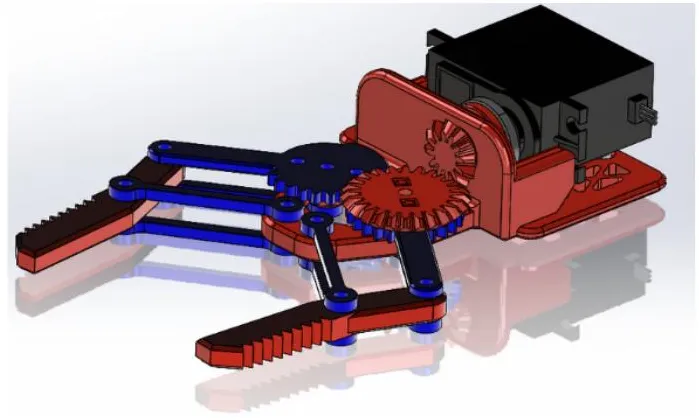
From February to June 2024, a second team evolved the platform into a small material-handling robot. A Jetson Nano ran ROS 2 nodes while RPLiDAR, odometry, ArUco markers, and a gripper supported navigation and pickup experiments. My contribution covered integration, early navigation work, ArUco tests, and LiDAR bring-up.
Integration result
The work produced repeatable subsystem tests and a clearer picture of the interfaces between perception, localization, navigation, and manipulation. The complete stack did not reach a reliable end-to-end autonomous run, so the evidence here is presented as an engineering study rather than a finished autonomous product.